Saturday, July 14, 2012

Weed Control a Big Part of Landscaping and Lawn Maintenance


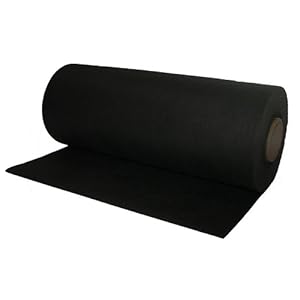
Ground Cover Weed Fabric Rolls 1mx 50m x 100gsm (a580)


By Desmond Walford

Landscaping maintenance typically involves some weed control effort. Unlike many of our desirable plants, weeds can germinate and grow during any season. Homeowners pull them up, only to have them come back again in a matter of days. Also, the majority of weeds are not particularly attractive and can take up valuable space, nutrients and water. Thus it is important to pay attention to weed control as part of your overall landscaping and lawn maintenance programme.

Some Weed Control Tips
For large lawns, the combination weed and feed products are very popular. The products include some type of compound to discourage weed growth or germination, along with fertilizer to keep the grass strong and green. The products must be used on a regular basis or they will be ineffective.

To really get weeds in the lawn under control, a complete plan is needed, along with strength, patience and intent if it is to be performed by the homeowner. The first application would be done in the early spring. The product would prevent the germination of weeds and would also fertilize the lawn.

The products will only last for about two months. Heavy rains will reduce the length of time they last. That is why the products need to be re-applied.

Although the products are designed for weed control, they can prevent the growth of new grass or kill existing grass if not applied correctly and in the proper amount. We often think that more is better, but in this case, the dosage must be right or the grass will die out, too.
A variety of grounds maintenance tools are available to help homeowners with the application process. For medium to large lawns, some type of spreader is needed. A good spreader helps to ensure that the fertilizer, seeds and weed control products are applied evenly at just the right dose.

Most experts recommend fertilizing and spreading weed control products every two months during the growing season. Four applications are sufficient in most areas, although in areas where there is a shorter dormant season, more applications may be necessary.

Some homeowners do the work themselves because they enjoy it and possess the strength, patience and inclination. Other homeowners hire grounds and garden maintenance teams to do the work for them. Sometimes, it makes more sense financially to hire a team that provides all the necessary equipment and expertise, as lawn and garden tools can become expensive, especially the higher quality tools. The cheap ones are usually of inferior quality, do not last as long.

Although weed control is a big part of landscaping and lawn maintenance, it should not act as an obstacle to maintaining the desired overall garden effect. Careful planning and consistent attention are crucial to understanding the types of weeds and their potential effect and appearance within your garden or grounds.

If you don't possess the strength or inclination to carry out regular weed control and overall garden maintenance, it's advisable that you consult with a local provider who has built a good reputation for delivering high quality maintenance services.
Don't let the thought of weed control get you down!

Weed Control, Landscaping and Lawn maintenance can prove difficult, particularly when required on a regular basis. Rance Landscapes a Hertfordshire based Garden Maintenance Specialist located in Watford specializing in commercial and residential garden maintenance which includes weed control, landscaping and lawn maintenance as core service components.

Rance Landscapes designs and delivers bespoke garden care plans that are designed to be cost effective and good value for money. Garden and Grounds Maintenance are key parts of our business and Rance Landscapes has developed a solid reputation for delivering value along with good customer service.

If you use Rance Landscapes we will take control and eliminate the Weed Control issues which are affecting your Landscaping and Lawn.

Visit Rance Landscapes today, for garden specialists who care about Landscape Gardening.


Article Source: http://EzineArticles.com/?expert=Desmond_Walford

http://EzineArticles.com/?Weed-Control-a-Big-Part-of-Landscaping-and-Lawn-Maintenance&id=6546608

Organic Weed Control

Weed Control Membrane Fabric 100m x 1.5m = 150sq mts


By John Yazo

Weeds are undesirable. They are just plants that grow in your garden, flowerbeds and in other places that you don't want them to grow. Flowers that grow where you don't want them are considered weeds and there are weeds that have beautiful flowers when in the right location are not considered weeds. Weeds are just nuisance plants that are not wanted.

All gardeners have to deal with the problem of weeds. There are ways to reduce the weed problem. Weed seeds exist in the soil of every garden and the seed can remain dormant for many years just waiting for the conditions to be perfect for them to germinate. The seeds are spread many ways, by birds, wind, amendments that you add to your garden soil like manures and other animals. There is no way of stopping seeds from entering your garden.

Prevention is the best way to deal with weeds. The most important thing to do is to properly mulch. You can mulch with grass clippings, compost, straw, or even shred paper and you can plant a short fast growing ground cover to choke out weeds in the larger areas that you don't have plants. Which ever technique you choose is fine. The use of mulch or ground covers prevents soil compaction, insect damage, disease to your plants and helps to retain moisture that will make for healthier plants that you want to grow.

Hand weed around plants and weed larger areas with a garden hoe burying the weeds so they will decompose into the soil if you don't use a ground cover in these areas. After you have completed the weeding you can place news paper or cardboard over the ground as mulch. Grass clippings, leaves and straw are also excellent mulches to use.

A environment friendly and healthy way of gardening. Organic Gardening is away of gardening in harmony with nature. Growing a healthy and productive crop in a way that is healthier for both you and the environment.
John Yazo

Article Source: http://EzineArticles.com/?expert=John_Yazo

http://EzineArticles.com/?Organic-Weed-Control&id=1817398

Natural Weed Control

King British Blanket Weed Control 250g


By Steven Blades
One of the key complaints about organic lawn care is that there are few products on the market that can kill weeds that are organic. This, fortunately, is an inaccurate assumption. There are dozens of products on the market that help you keep weeds under control, and all of them are safe for the environment.

The best way to combat weeds is to simply prevent them. The easiest way to avoid the growth of weeds is by simply maintaining your lawn. Keeping healthy plant life, and watering properly will help keep the weeds at bay, while improper watering and allowing for soil compaction to occur will only help weeds to grow in the first place. Of course, if you have a big yard it's nearly impossible to prevent the growth of weeds, and in that case you're going to have to remove them before they kill off your desirable plants.

One method of natural weed control is with the use of barriers. Thin, plastic barriers set up around your plants will prevent the growth of weeds. This tactic works very well with summer plants such as tomatoes and melons. Another good alternative to plastic is paper, especially newspaper. Newspaper is a lot durable than most other kinds of paper, although all paper is organic. You don't have to use anymore than a quarter of an inch of paper. You will want to weigh it down, probably with water to help release some of the nutrients still present in the paper, and then cover the whole thing with either soil, compost or straw.
If everything fails and you still get weeds, all you have to do is go to your nearest outdoor supply store and look for products that say they are organic. Luckily, they are a lot more common than you think they would be.
To learn more about organic lawn care, visit [ http://eweedconril.blogspot.com/2012/07/weed-control-in-your-lawn.html ] where you will learn everything you need to know about things like how to perform soil testing [http://www.bladeslawncare.com/soil/performsoiltesting.html], how to prevent soil erosion, and much more.

Article Source: http://EzineArticles.com/?expert=Steven_Blades
http://EzineArticles.com/?Natural-Weed-Control&id=1221931

Saturday, July 7, 2012

Weed Control in Your Lawn


Verdone Extra 1L Liquid Concentrate Lawn Weed Killer


  By Andrew Bicknell
Nearly everyone who has a lawn has the problem of weeds interfering with their vision of a lush green lawn. Weeds are not something anyone who desires a beautiful lawn wants to deal with. They are an uninvited guest that shows up unexpectedly and will only leave once brute force is applied. Weed control can be very frustrating for many people because of the amount of time and work it takes with seemingly little results. Weed control is very important for the health and well being of your lawn, if your patient and don't get discouraged before long your weed killing efforts will be rewarded with a visible change in the appearance of your yard.

If a thick plush lawn is always something you have dreamed about having then dream no more, once you have your weeds under control your lawn will spring to life. Weeds naturally compete with your grass for the three things it needs to live, water, soil nutrients and sunlight. Without these your grass will not grow like it should. With proper weed control you can get rid of all the weeds giving your lawn the chance to grow and thrive like never before. As long as the weeds have a foothold your lawn will not look real good.

Done properly weed control can eradicate nearly all the weeds in your yard for good. There are two ways in which weeds reproduce and grow. Some grow through the year, produce seeds and then die. There are other weeds that grow year after year as well. They also produce seeds furthering the amount of weeds that will sprout in your yard. With the right kind of weed control both these types of weeds can be destroyed and any seeds they drop are rendered sterile, or unable to grow.

This does not mean that viable weed seeds cannot infest your lawn from outside sources such as wind blown in or bird droppings but if your lawn is weed free and grows thick and lush any wind blown seeds will have a very hard time sprouting, much less growing.

Having a yard that has 'curb appeal' is a lawn that has good weed control measure in place. It adds to the look and value of your home and chances are your neighbors will be envious and will want to know how you got rid of the weeds and made you yard look so good.

Do you want to learn more about how your lawn can benefit from a good  Weed control program? If so please visit the website http://eweedconril.blogspot.com

Article Source: http://EzineArticles.com/?expert=Andrew_Bicknell
http://EzineArticles.com/?Weed-Control-in-Your-Lawn&id=448835


Weed Control For The Organic Gardener

Weeds are the bane of every gardener. It's a stone cold fact.  Scotts Miracle-Gro weed Control   - you cannot have one without the other. It is no different for the organic gardener although the approach and some of the things you will use as an organic gardener to tackle your weeds is different to the traditional gardener as you will be using the natural twin attack of compost and mulch.

There is no escaping basic weed control however. You can get in to the routine of this by keeping an eye on your garden regularly and using a small hoe to cut out any small weeds you see appearing before they can grow to do any real damage. Your organic garden will have the sweet, naturally developed soil you have cultivated yourself which can make the chore easier. Do this thoroughly before applying any mulch.

When anything you have planted in your garden gets a firm hold you might think about putting down to have the effect of holding in any moisture and helping to keep weeds at bay by starving them of light. As you are gardening organically use material from natural sources. For example composted down grass cuttings or chopped leaves. This will have the added benefit of nourishing the soil as the natural mulch decomposes.

If any weeds do manage to struggle through your layer of organic mulch it is likely that they won't have got too much in the way of roots behind them and you may be able to nip them out of the soil fairly easily.

If mulching isn't practical for you then a natural alternative to protect your organic gardening principles is to use newspaper as a ground cover which will decompose naturally. Just put down four or five layers between your plants and cover with a thin covering of soil to weight it down. This has the same effect as mulching and the weeds will be starved of light and find it very difficult to grow through.
Even though the natural weed control measure we have explored above should help keep the darned things down you will not get rid of weed completely. So allied with your organic measures you will still have to undertake some traditional weed control to keep your garden in tip-top shape.

This is where your friend the hoe comes to your aid again. Use it to chop off any stubborn weeds from their roots just below the surface of the soil and be sure to collect the chopped off weeds and dispose of them. Do not leave them in your garden or you will be seeing them again.

Hoeing and pulling up weeds is unfortunately manual labor and no fun. Though the satisfaction of seeing your healthy, thriving and well kept organic garden and all you grow in it will make it worthwhile. It is simply part of weed control to back up the organic mulching and composting techniques you will also use.

I hope you found this article of interest. You might also consider including a garden wormery in your garden planning. It is quick, easy, cheap and can save you money. Start to produce your very own natural compost using the power of the simple garden worm. Please download this free eBook on the subject for more information.


Article Source: http://EzineArticles.com/?expert=Andy_Machin
http://EzineArticles.com/?Weed-Control-For-The-Organic-Gardener&id=6917055


Blanket Weed Control - Causes Of String Algae And How To Get Rid Of It

Scotts Lawn Builder 400 sq m Lawn Food plus Weed Control Bag


By Lexorwendy Aguiza

Pond owners now how much of a pest blanket weed can be. These filamentous algae are also known as string algae. There are three main factors that enable this unwanted algae to thrive in ponds; nutrients, high temperatures, and clear water. When a pond has all three of these factors, this algae really takes over in a short period of time. Below, we're going to learn about blanket weed control.

Nutrients:
Algae absolutely love phosphates and nitrates. Tap water usually contains both of these nutrients and a fish's metabolism also indirectly makes them available to the algae.
High Temperatures:
Ponds are virtually free from anything green during the winter months; this is because algae needs very warm temperatures to thrive. The more sun water gets, the warmer it becomes. This increase in temperature is just what the algae want.

Clear Water:
String algae enjoy basking in the sunlight. The more sunshine they get, the more they multiply. For example, Koi are often farmed in ponds that are murky, known as mud ponds. The water in these ponds is also shaded, which combines to the turbid conditions within the water itself. This algae aren't able to get the large amount of sunlight they need when residing in murky ponds. However, a clean and clear pond is not only more desired by humans, but also by the algae.

Ponds that have never had so much as a trace of string algae can still end up harbouring it. Koi ponds are kept in such a way that the fish are comfortable, but this also means that the algae are equally at home. Even though people try and try to keep the algae from growing, Koi fish actually like it. They find it to be a perfect location for their nursery and they enjoy nibbling on it too. The algae will only grow when the conditions are perfect. Sometimes this perfection takes a while to achieve, thus the delay in the formation of string algae.

Shallow, sunny locations are the parts of a pon affected the most by these persistent algae. The water doesn't have to be completely still either. Fast-flowing water that is also shallow encourages string algae to grow into longer strands than when the water is still.

If any of the three factors can be altered, then string algae have a very difficult time ever getting established. Nutrients levels can be lowered through the addition of barley straw, algaecides, or electric controllers that use calcium ions. The temperature can be lowered by shading the pond area with new trees, building some type of structure to supply shade, or adding a dye to the water. The dye can also distort the clarity of the water, which inhibits algae growth.

Once at least one of these three factors is altered, blanket weed will be a distant memory. There's nothing more satisfying than have a beautiful pond with healthy fish and gorgeous water lilies in bloom. Keeping this algae out of the loop is easy to do, thanks to all the different methods to inhibit the growth of it.

Weed Control is one of the most harmful types of algae that exist in ponds and can become huge problem for a pond owner.


Article Source: http://EzineArticles.com/?expert=Lexorwendy_Aguiza
http://EzineArticles.com/?Blanket-Weed-Control---Causes-Of-String-Algae-And-How-To-Get-Rid-Of-It&id=6157949 

Friday, June 29, 2012

Which Weed Killer Works Best for Weed Control?


By Mike C Palmer

There are so many weed control products out there on the market that it can be confusing sometimes to pick which one will work best for your lawn. Which weed killer works best really depends on your situation. Different products are formulated to solve different problems at different stages of weed development.

The following explains the different products you might see on the shelf of your local home and garden store.

Pre-Emergent Herbicides
To prevent weeds from growing in areas that have been known to have weeds, you should use Pre-Emergent Herbicides. This type of herbicide prevents seed germination, so you would use it before the weeds start growing. It's a preventative measure you should take before the growing season starts.

Post-Emergent Herbicides
Once the weeds are already growing, you will need to use Post-Emergent Herbicides. These herbicides kill growing plants either by contact or by getting absorbed into the weed and killing it from the roots. Roundup weed killer is one of the most popular weed control product out there. It's a post-emergent and non-selective herbicide which kills growing vegetation on contact.

Selective Herbicides
As its name suggests, this type of herbicide kills selected type of weeds. They are usually designed to target broad-leafed plants without harming the grass.

Non-Selective Herbicides
This type of herbicide kills indiscriminately, thus the term "non-selective". It can potentially kill or damage any plant it comes in contact with. For this reason, non-selective herbicide should only be used for spot treatments.

Total Vegetation Herbicides
This is the most powerful herbicide as it completely kills all vegetation where it's applied and will sterilize that area for some time. Use this type of herbicide with extra caution.
Many people tend to overdo it when applying herbicides not knowing the nature of the herbicide they purchased. The proper application of the right herbicide will help solve your weed infestation problem. But you must read the package label very carefully. Don't waste time and money, and possibly killing the wrong plants by not following the instructions. Herbicides are chemicals that can harm the environment when not used properly. So take your time to understand what your lawn needs, then determine which type of herbicide works best for your situation.

Mike C. Palmer is a lawn and garden enthusiast. He blogs about lawn care tips and writes comprehensive reviews on lawn mowers.

Go here to read hundreds of unbiased reviews and complaints about lawn mowers, including those recommended by Click to>>>>Bestsellers in Weed Control

Article Source: http://EzineArticles.com/?expert=Mike_C_Palmer
http://EzineArticles.com/?Which-Weed-Killer-Works-Best-for-Weed-Control?&id=5824024


Aronia Planting Guide - Part I - Soil PH, Soil Needs, Weed Control, and Watering

 
Aronia Planting Guide - Part I - Soil PH, Soil Needs, Weed Control, and Watering

By Harold Stewart

Introduction
Aronia Plants Are Nature's Super Healthy Creation

Aronia is a true Native American plant that is widely grown in Europe for fruit production. A native plant, developing in the North America ecosystem, Aronia bushes have adapted to grow in growing zones 3 to 7. It is a perennial, deciduous, self pollinating, self-supporting shrub.
There are many advantages to growing an aronia plant on your property. It is a very ornamental and resilient plant. It is adapted to the natural ecosystem; it is better able to withstand invasions from insects and diseases as well as the natural variations in the climate than non native plants. Native aronia plants require little care once established on your property. The flowers are self pollinating (apomictic), thus only one plant is needed to produce fruit. Full of antioxidants, Aronia produces one of the healthiest berries on the planet. The Viking and Nero varieties are heavy fruit producers and can be a major source of income for a small farm.

Basics
Sun
- Aronia does best in full sun but will also grow in shade

Soil pH
Aronia plants do best in a slightly acidic soil with an optimum pH range of 6.1 to 6.5. They however will grow in acidic, neutral, or alkaline soil with a pH range from 5.3 to 7.8. Some report the optimum pH range is 6 to 7. A pH of 7 is neutral and higher is alkaline and lower is acidic. Blueberries in comparison require a well-drained soil with a pH of 4.5 to 5.2.

Soil needs and weed control
- Have a soil sample from your field analyzed by your county agent if there is any doubt about your soil conditions and amend soil as needed. Aronia will grow in many types of soil, Sandy, clay, loamy.
A well prepared soil before starting the plantation is a basic requirement and will have an impact on fruit production and the beginning of fruiting. For poor soil adding organic material such as manure is recommended before planting aronia plants.

The planting area must first be cleared from weeds. This will make the cultivation of the young plants easier in the first years because young aronia plants are sensitive to weeding to a high degree. Another alternative is to use landscaping cloth or layers of newspaper to control weed growth during the first 3 or 4 years of plant development. Consider using permeable landscape cloth to control weeds if too much labor is required to control weeds otherwise. Weeds are one of the major factors in reducing farm productivity. At blueberry Croft farm and nursery landscaping cloth is used to help control the weed problem. The landscaping cloth or news papers need to be covered with mulch to a depth of about 2 to 4 inches. Landscaping cloth prevents the growth of most weeds (although some grasses will grow through them) and they will allow normal water and oxygen exchange. Use a coarse-textured mulch material to cover the landscape fabric. At 4 to 5 years of age, aronia will have developed a good root system and several additional new canes because of its suckering nature making it strong enough to choke weeds out and you then only need to mow in the rows between the plants. It has a tap-root which helps it be somewhat drought tolerant once it is established.

Watering
When practical, especially when precipitation levels are low or availability of water is limited, you should use water-efficient drip irrigation or soaker hoses. Water plants once or twice a week to keep soil moist, not wet if there is not enough rain. Be ready to water during extended periods of hot sunny, windy, dry spells. To help roots develop allow soil to dry moderately several inches deep before irrigating.

The soil needs to be kept moist, particularly during the very first two years after the plant is planted. Use a thick mulch of leaves or other compost following planting to assist retaining moisture and suppress weeds. Aronia will take about 5 years to attain full productivity but should start producing some berries the third year.

- Keep them watered especially while the plants are first getting established. Newly planted aronia must have adequate soil moisture until their roots are established.

Lack of water for plants producing fruit is one of the most significant factors in reduced fruit yield and berry size. Aronia plants can tolerate over saturation more effectively than other plants.
Purchase your pesticide free aronia and blueberries from (Blueberry Croft Farm and Nursery). 


We understand both the theory and practical applications of growing aronia and blueberries. The farm is a reputable source for quality aronia and blueberry plants. Over 30 varieties of blueberries are grown and sold. Viking aronia plants are available for sale. Purchase your plants and get more information  Bestsellers in Weed Control . free S/H on orders of $75+. � 2011 May be reproduced in entirety with live link
Article Source: http://EzineArticles.com/?expert=Harold_Stewart
http://EzineArticles.com/?Aronia-Planting-Guide---Part-I---Soil-PH,-Soil-Needs,-Weed-Control,-and-Watering&id=6925684


Weed Control For The Organic Gardener


By Andy Machin

Weeds are the bane of every gardener. It's a stone cold fact. Gardens and weeds - you cannot have one without the other. It is no different for the organic gardener although the approach and some of the things you will use as an organic gardener to tackle your weeds is different to the traditional gardener as you will be using the natural twin attack of compost and mulch.

There is no escaping basic weed control however. You can get in to the routine of this by keeping an eye on your garden regularly and using a small hoe to cut out any small weeds you see appearing before they can grow to do any real damage. Your organic garden will have the sweet, naturally developed soil you have cultivated yourself which can make the chore easier. Do this thoroughly before applying any mulch.

When anything you have planted in your garden gets a firm hold you might think about putting down to have the effect of holding in any moisture and helping to keep weeds at bay by starving them of light. As you are gardening organically use material from natural sources. For example composted down grass cuttings or chopped leaves. This will have the added benefit of nourishing the soil as the natural mulch decomposes.

If any weeds do manage to struggle through your layer of organic mulch it is likely that they won't have got too much in the way of roots behind them and you may be able to nip them out of the soil fairly easily.

If mulching isn't practical for you then a natural alternative to protect your organic gardening principles is to use newspaper as a ground cover which will decompose naturally. Just put down four or five layers between your plants and cover with a thin covering of soil to weight it down. This has the same effect as mulching and the weeds will be starved of light and find it very difficult to grow through.

Even though the natural  Weed Control measure we have explored above should help keep the darned things down you will not get rid of weed completely. So allied with your organic measures you will still have to undertake some traditional weed control to keep your garden in tip-top shape.
This is where your friend the hoe comes to your aid again. Use it to chop off any stubborn weeds from their roots just below the surface of the soil and be sure to collect the chopped off weeds and dispose of them. Do not leave them in your garden or you will be seeing them again.

Hoeing and pulling up weeds is unfortunately manual labor and no fun. Though the satisfaction of seeing your healthy, thriving and well kept organic garden and all you grow in it will make it worthwhile. It is simply part of weed control to back up the organic mulching and composting techniques you will also use.

I hope you found this article of interest. You might also consider including a garden wormery in your garden planning. It is quick, easy, cheap and can save you money. Start to produce your very own natural compost using the power of the simple garden worm. Please download this free eBook on the subject for more information.

Article Source: http://EzineArticles.com/?expert=Andy_Machin

Blanket Weed Control - Causes Of String Algae And How To Get Rid Of It

Blanket Weed Control - Causes Of String Algae And How To Get Rid Of It  

By Lexorwendy Aguiza
Pond owners now how much of a pest blanket weed can be. These filamentous algae are also known as string algae. There are three main factors that enable this unwanted algae to thrive in ponds; nutrients, high temperatures, and clear water. When a pond has all three of these factors, this algae really takes over in a short period of time. Below, we're going to learn about blanket weed control.

Nutrients:
Algae absolutely love phosphates and nitrates. Tap water usually contains both of these nutrients and a fish's metabolism also indirectly makes them available to the algae.

High Temperatures:
Ponds are virtually free from anything green during the winter months; this is because algae needs very warm temperatures to thrive. The more sun water gets, the warmer it becomes. This increase in temperature is just what the algae want.

Clear Water:
String algae enjoy basking in the sunlight. The more sunshine they get, the more they multiply. For example, Koi are often farmed in ponds that are murky, known as mud ponds. The water in these ponds is also shaded, which combines to the turbid conditions within the water itself. This algae aren't able to get the large amount of sunlight they need when residing in murky ponds. However, a clean and clear pond is not only more desired by humans, but also by the algae.


Ponds that have never had so much as a trace of string algae can still end up harbouring it. Koi ponds are kept in such a way that the fish are comfortable, but this also means that the algae are equally at home. Even though people try and try to keep the algae from growing, Koi fish actually like it. They find it to be a perfect location for their nursery and they enjoy nibbling on it too. The algae will only grow when the conditions are perfect. Sometimes this perfection takes a while to achieve, thus the delay in the formation of string algae.

Shallow, sunny locations are the parts of a pond affected the most by these persistent algae. The water doesn't have to be completely still either. Fast-flowing water that is also shallow encourages string algae to grow into longer strands than when the water is still.

If any of the three factors can be altered, then string algae have a very difficult time ever getting established. Nutrients levels can be lowered through the addition of barley straw, algaecides, or electric controllers that use calcium ions. The temperature can be lowered by shading the pond area with new trees, building some type of structure to supply shade, or adding a dye to the water. The dye can also distort the clarity of the water, which inhibits algae growth.

Once at least one of these three factors is altered, blanket weed will be a distant memory. There's nothing more satisfying than have a beautiful pond with healthy fish and gorgeous water lilies in bloom. Keeping this algae out of the loop is easy to do, thanks to all the different methods to inhibit the growth of it.

Bestsellers in Weed Control is one of the most harmful types of algae that exist in ponds and can become huge problem for a pond owner.
Article Source: http://EzineArticles.com/?expert=Lexorwendy_Aguiza
http://EzineArticles.com/?Blanket-Weed-Control---Causes-Of-String-Algae-And-How-To-Get-Rid-Of-It&id=6157949

Easy to use and kills 98% of weeds quickly.


By debbie8355  

I've used the Roundup self pump spray on my driveway before - the 1 litre version in a red bottle which gave excellent weed killing results but also ended up giving me blisters and hand ache from the spray mechanism (added to that the liquid had a tendency to run down your arms). 1 litre would kill the weeds on a narrow strip both sides of my double length driveway.


This however is a brilliant spray design that requires no effort to use. Just pump, point and spray after assembling it with the very easy instructions on the back. No leakage or problems. All the parts are originally held together with strong plastic ties which can be chopped of with scissors or garden shears (if you have got down to your allotment and thought carp I've forgotten my scissors).


I bought a bottle of this as I had an allotment with ankle high weeds of about 30 different types. This did the job and killed everything quickly with one application except really thick leaved weeds like those giant dock leaves you are supposed to put on nettle stings and some close ground thick leaved weeds. They did look very poorly though and were easy to spot and lift from the yellow completely dead carnage around them as I hadn't got the patience to wait the extra weeks for full effect.


Once the weeds have died to a yellow carpet (takes about 3 days on my driveway, didn't go back to my allotment for 2 weeks)I found it easy to tear the weeds like a yellow carpet from the soil apart from a few dead, deep clumps which required a bit of digging.


You are meant to prime the spray with about 20 pumps. I was surprised on first use that this only gave about 4 x 3 minute sprays so I only covered about a 4m x 4m area. This was on huge tall weeds though so I was giving them an extremely thorough dousing from all angles. The instructions say it should treat 150 square metres. I'll be a bit more sparing next time.


As for the rest of the blurb on the back of the bottle amongst other things it says:


It can be used to clean up weedy ground before planting vegetables, flowers, bushes and trees, and to renovate overgrown areas.


Weeds may show first effects from a few days up to 4 weeks, depending on the weather and type of weed.


Leave weeds 7 days before digging or soil cultivation, for the weedkiller to move to the roots.


You have to be pretty strong to remove the top to refit a refill or know someone who is.